Programming in C
Arrays, Strings, and Functions
This module contains essential notes on one/two/multidimensional arrays, character arrays and strings, user-defined functions, recursion, and basic searching and sorting concepts.
Arrays
- Array — collection of elements of the same type in contiguous memory.
- One-dimensional: declaration
int a[10];, indices 0..9. - Two-dimensional: matrix declaration
int m[3][4];. C uses row-major order. - Multidimensional: extend the same idea, e.g.
int t[2][3][4];. - Static init:
int a[3] = {1,2,3}; - Dynamic allocation: use
mallocandfreefor runtime sizes.
Static vs dynamic
// static
int a[5] = {0};

// dynamic
int *b = malloc(n * sizeof(int));
if (b == NULL) { /* handle error */ }
free(b);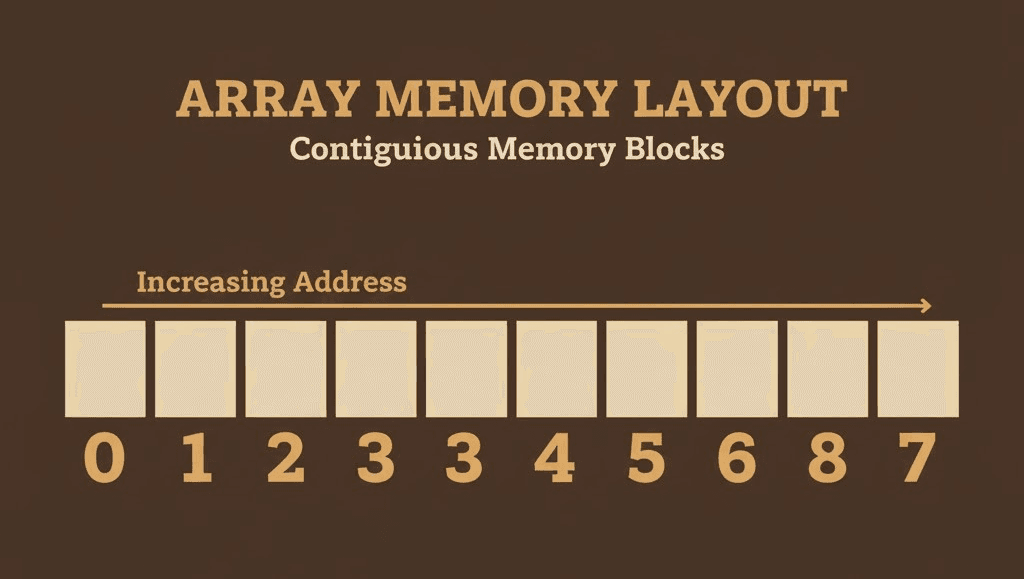
Character Arrays and Strings
- Character array:
char s[6] = {'H','i','\0'}; - String literal:
char s[] = "Hello";(null-terminated). - Common functions:
strlen,strcpy,strcmp,strcat. - Comparison: use
strcmp(a,b), not the==operator. - Safety: always ensure space for the terminating
'\0'and prefer bounded input.
String example
char s[6] = "Hello";
printf("%s
", s);
if (strcmp(s, "Hello") == 0) { /* equal */ }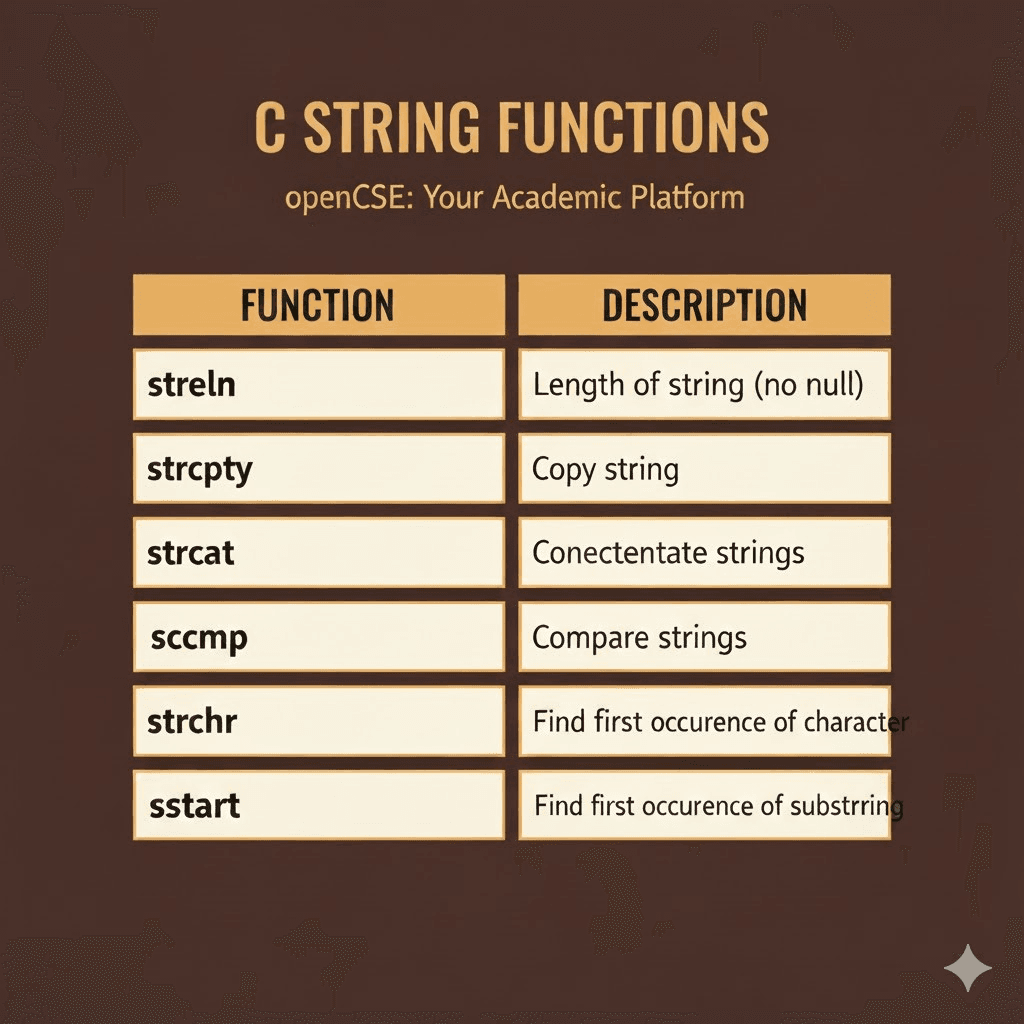
Functions (User-defined)
- Prototype / declaration: e.g.
int add(int, int); - Definition: code body, e.g.
int add(int a, int b) { return a + b; } - Call:
sum = add(x, y); - Parameter passing: C passes by value. To modify caller data, pass a pointer (pass-by-reference style), e.g.
void inc(int *p). - Passing arrays/strings: arrays decay to pointers; use signatures like
void f(int a[], int n)orvoid f(char s[]). - Scope: local variables have block scope; globals have file or external linkage;
staticaffects lifetime/linkage.
Pass by value vs. pointer
void inc_val(int x) { x = x + 1; }     // caller not changed
void inc_ref(int *p) { *p = *p + 1; }  // caller changed

int a = 5;
inc_val(a);    // a still 5
inc_ref(&a);   // a becomes 6
Recursion
- Recursive function: a function that calls itself.
- Base case: required for termination; always identify it.
- Tail recursion: recursive call is the last action; can be optimized in some compilers.
- Analysis: formulate recurrence (e.g.,
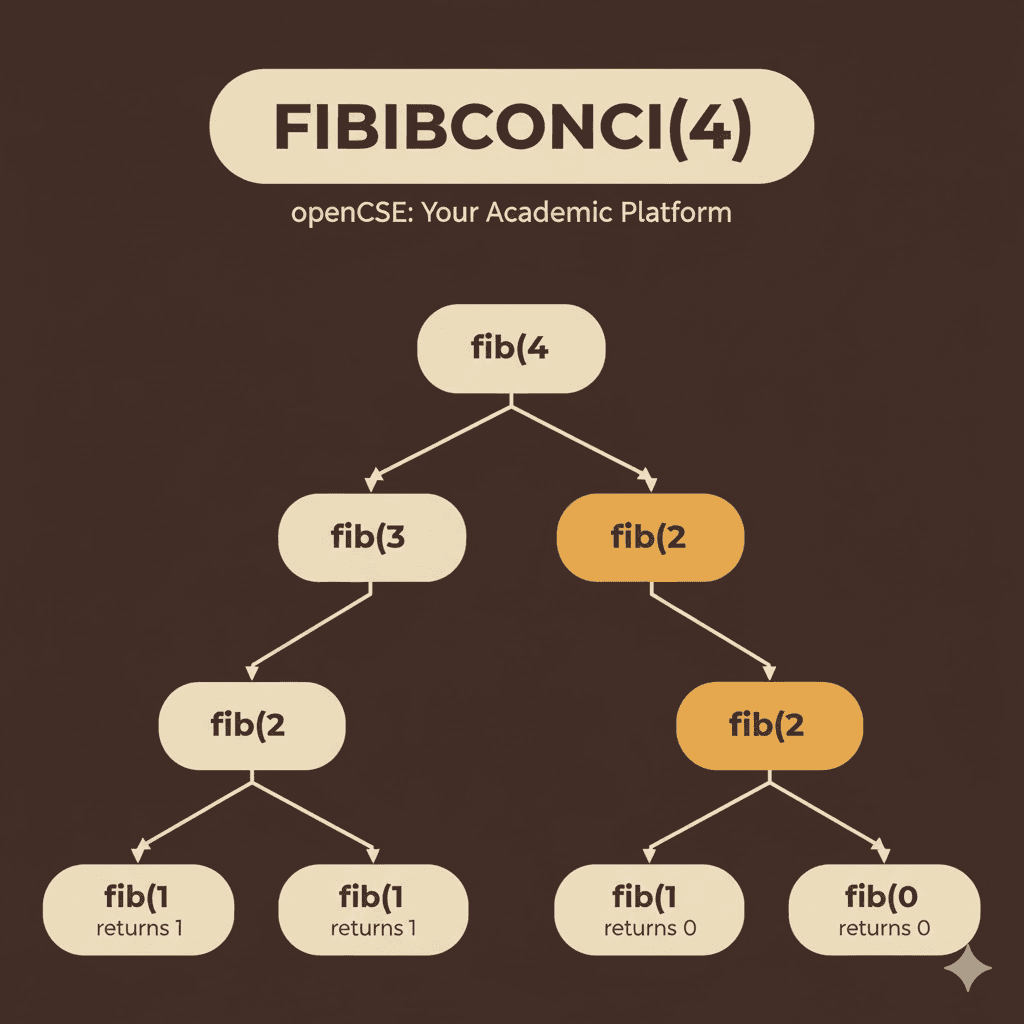
T(n)=T(n-1)+O(1)) and solve for complexity. - Recursion tree: visualize calls and costs per level for complexity analysis.
Factorial (recursive vs iterative)
// recursive
int fact(int n) {
  if (n <= 1) return 1;
  return n * fact(n-1);
}

// iterative
int fact_iter(int n) {
  int r = 1;
  for (int i = 2; i <= n; i++) r *= i;
  return r;
}
Searching and Sorting — Basics
- Linear search: scan sequentially; O(n) worst-case.
- Binary search: requires sorted array; O(log n).
- Sorting (intro): be familiar with bubble, insertion, selection; know their basic complexities.
Linear search
int linear_search(int a[], int n, int key) {
  for (int i = 0; i < n; i++)
    if (a[i] == key) return i;
  return -1;
}
Debugging Exercise
Find and fix the errors
#include <stdio.h>

int sum_rows(int m[][3], int r) {
  int s = 0;
  for (int i = 0; i <= r; i++) {   // error: loop bounds (<=) incorrect
    for (int j = 0; j < 3; j++)
      s += m[i][j];
  }
  return s;
}
Correct points
- Fix row loop to
for (int i = 0; i < r; i++)ifris the row count. - Array parameter requires known second dimension:
m[][3].
Programming Exercise
- Write a function to search for a string in an array of strings and return index or -1.
- Implement insertion sort on an integer array and state its time complexity.
Ready to test your Processes & Scheduling knowledge?
Processes & Scheduling
A short quiz for process concepts and CPU scheduling after the Processes section.
5 questions·No time limit·Instant feedback